Socratis OS

A good weekly review gives you somewhere to stand. You gather what happened, notice what is still asking for attention, and choose how to move forward. You do not need a perfect record of the week. You need enough clarity to make the next one more deliberate.
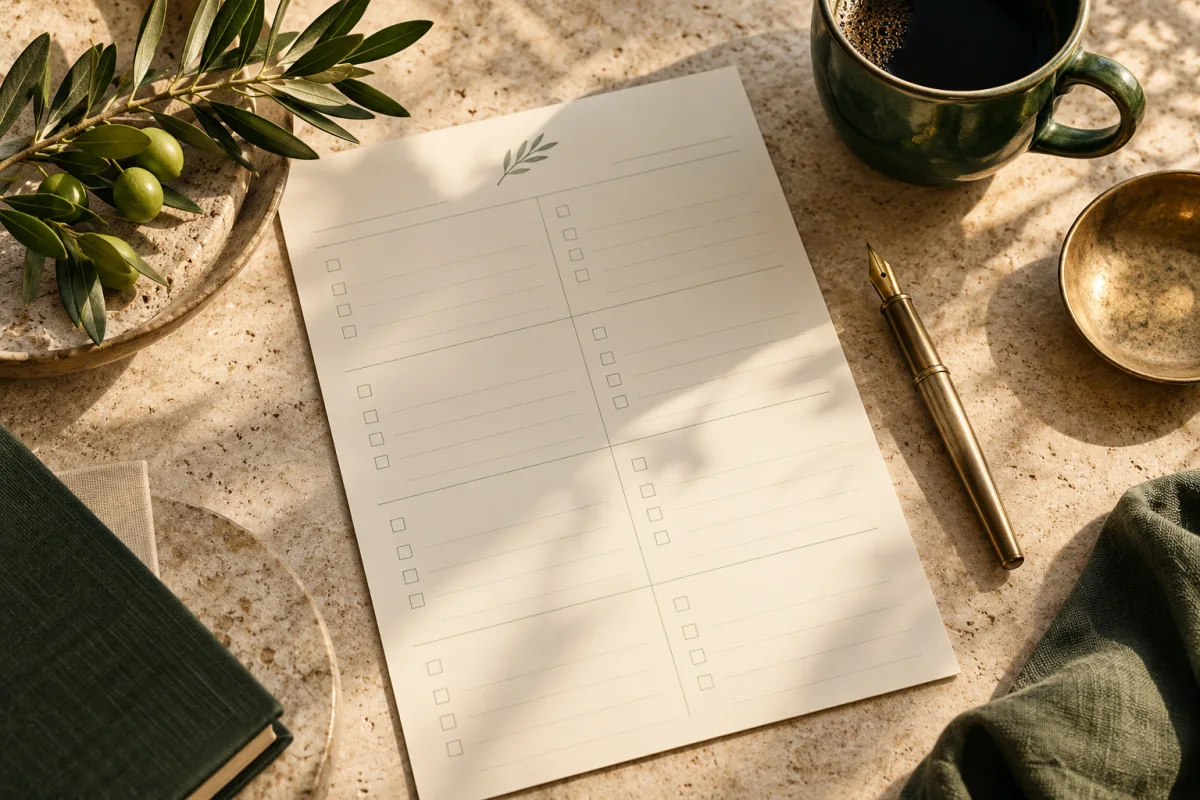
Set aside 25 minutes, open one note, and keep your calendar nearby. This ritual works with paper, a notes app, or the tools you already use. If you want a worksheet beside you, open the copyable weekly review template.
1. Gather the loose ends: five minutes
Look through your calendar, task list, and the notes you used this week. Capture unfinished promises, unanswered questions, and ideas you want to keep. Write a line for each item. Resist reorganising your entire workspace: gathering is enough.
- What did I promise someone?
- What am I carrying in my head?
- What needs a decision before it needs more work?
If the list grows quickly, stop when your timer ends. Mark the places you have not checked. A useful review can be incomplete.
2. Read the week with curiosity: five minutes
Write one thing that moved forward, one thing that felt harder than expected, and one lesson worth keeping. Use observable details. “I sent the proposal after cutting its scope” tells you more than “I was productive.”
Notice conditions as well as outcomes. Did a quiet morning help? Was a task unclear? Did your calendar contain less usable time than you assumed? These observations help you improve the plan without turning the review into a judgement about yourself.
3. Give each open loop a home: seven minutes
For each important loose end, choose one of four moves: do, schedule, ask, or release. “Ask” is useful when progress depends on missing information. “Release” means consciously closing something you no longer intend to pursue.
Turn vague tasks into visible next actions. Replace “work on launch” with “draft the three questions the landing page must answer.” If an item is bigger than a week, keep the project but choose a smaller action. The project reset guide can help with work that has become difficult to re-enter.
4. Choose a direction: five minutes
Select one main outcome for the coming week. Add up to two supporting outcomes if your available time makes them credible. Check meetings, deadlines, and personal commitments before deciding. Leave some space for work you cannot yet predict.
Consider an independent consultant with two client calls, a proposal, and an unfinished website. Her review might read:
Lesson: the proposal stalled because the deliverables were unclear.
Main outcome: send a scoped proposal by Thursday.
Next action: ask the client to confirm two deliverables on Monday.
Make space: pause the website rewrite until next week.
The plan now contains a choice and an action, rather than three competing intentions. Use the weekly planning guide to turn that choice into a workable calendar.
5. Close the review: three minutes
Write your first next action and choose when you will return to it. Then stop. A review has done its job when you can begin without reconstructing every decision.
My week taught me: ___. Next week matters because: ___. My main outcome is: ___. The first action is: ___. I am choosing to pause: ___. I will review this again on: ___.
When the week went sideways
Try a ten-minute version: gather three loose ends, name one lesson, and choose one next action. Missed reviews do not create a debt. Start from the week you actually have.
Should I use AI? You can ask it to group a short, non-sensitive list of notes, then check the result yourself. Keep the final choices in your own words. A summary can organise your thinking; it cannot know what matters unless you tell it.
Socratis OS is in development as an intended home for knowledge, decisions, and work across AI sessions. If this approach resonates, join the early-access waitlist.