Socratis OS
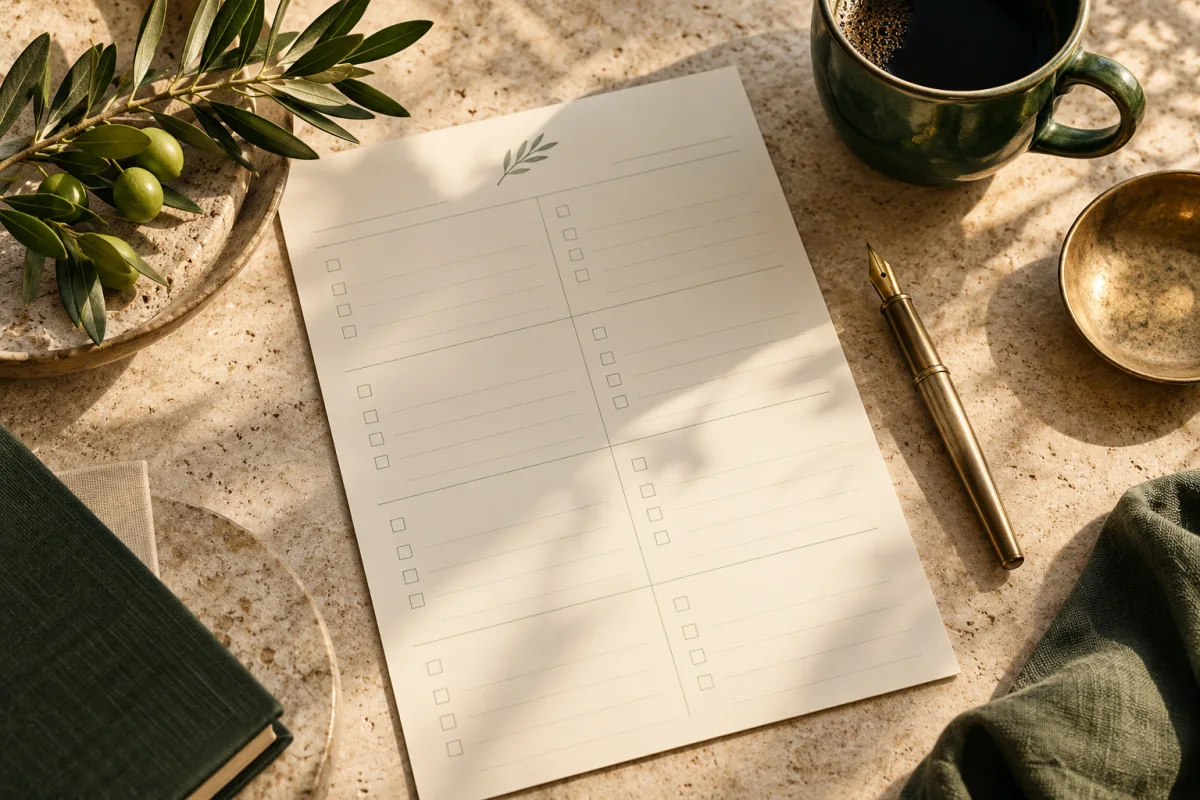
Copy the worksheet below into your notes or a document. Give yourself 20 minutes, keep your calendar nearby, and answer in short phrases. You are looking for a useful next step and a little more understanding of the week you have just lived.
If you would like the thinking behind the ritual, read how to do a weekly review. This page is designed to be used straight away.
Copy this weekly review worksheet
Week ending: ___
Review date: ___1. Gather: three minutes
Loose ends from my calendar, tasks, and notes:
• ___
• ___
• ___
Promises or replies I need to address: ___.2. Notice: four minutes
Something that moved forward: ___.
Something that was harder than expected: ___.
A condition that helped or got in the way: ___.
A lesson I want to keep: ___.3. Decide: four minutes
Do next: ___.
Schedule for a specific time: ___.
Ask someone or clarify: ___.
Pause, release, or renegotiate: ___.4. Choose: four minutes
My main outcome for next week: ___.
Why it matters now: ___.
A useful finished result would look like: ___.
Supporting work, if capacity allows: ___.5. Check capacity: three minutes
Fixed commitments next week: ___.
Time I can realistically use for this outcome: ___.
Something I will make smaller or move: ___.
My smaller useful version if the week changes: ___.6. Begin: two minutes
My first action: ___.
Materials or information I need: ___.
When I will begin: ___.
My next review date: ___.
A filled example
Here is how a creator might use the worksheet while balancing client work with a new workshop idea. Notice that the review leads to a scoped commitment rather than an ambitious list.
- Gather: reply to a workshop enquiry, finish client revisions, and organise three pages of workshop notes.
- Notice: the client draft moved forward after a clear feedback call. The workshop outline stalled because its audience was broad.
- Decide: finish the revisions, ask the organiser which audience is attending, and pause slide design.
- Choose: create a one-page workshop outline with three learning outcomes.
- Check capacity: two 45-minute sessions remain after client delivery. The smaller version is an audience statement and three learning outcomes.
- Begin: send the audience question on Monday, then draft from the organiser’s answer.
If choosing the main outcome is difficult, use the 20-minute priority exercise before filling in section four.
The five-minute reset
For a disrupted week, use just these three lines. Set a timer, write your answers, and stop when you have a next action.
The most important loose end is ___.
What I understand about it now is ___.
The next useful action I can take is ___.
You can return to the longer worksheet when it is useful. A missed review does not require a longer review next time. Start with what matters today.
Optional AI reflection prompt
I am reviewing my week. Here are my non-sensitive notes: ___. Help me identify repeated themes and unresolved questions. Separate observations from interpretations. Ask me which outcome matters most before suggesting next actions. Do not add commitments or assume every unfinished task must carry forward.
Read the response against your original notes. Correct any missing context and make the final choices yourself. For ongoing work across conversations, the AI context brief template can help you preserve the useful result.
Where should I keep the completed review?
Use a place you already return to, and give each entry a date. Keep the format consistent enough to scan, while allowing yourself to shorten or change questions that no longer help.
Socratis OS is in development. Its intended direction is a durable home for knowledge, decisions, and work across AI sessions. Join the early-access waitlist for updates.